

 1901 Sinks
 Abey
Abey
 ADP
ADP
 ART Australia
 Blanco
 Caroma
 Decina
 Fienza
 Forme
Forme
 Geberit
 Linkware
 Linsol
 Lockwood
 Martec
 Meir
Meir
 Mercator
 Nero Tapware
 Oliveri
 Parisi
 Phoenix
 Radiant Heating
 Remer
Remer
 Timberline
 Turner Hastings
 Zip Water
 Accessories
 Basins
 Baths
Baths
 Mirrors
 Showers
 Taps
Taps
 Toilets
 Wastes
 Assisted Living
 Heating & Ventilation
 Boiling / Chilled / Sparkling Taps
 Sinks
Sinks
 Sink Accessories
 Laundry Tubs
 Laundry Taps
 Ceiling Fans
 Lighting
 Cooktops
 Induction Cooktops
 Gas Cooktops
 Electric Cooktops
 Dryers
 Fridges
 Microwaves
 Ovens
Ovens
 Rangehoods
 Washing Machines
 Black
Black
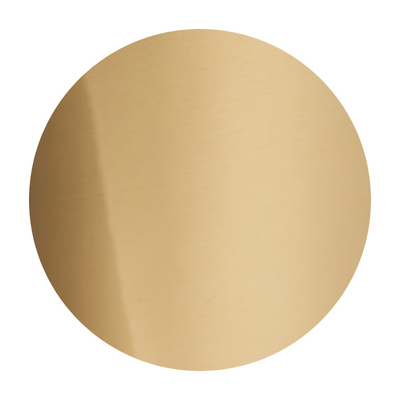 Brushed Brass
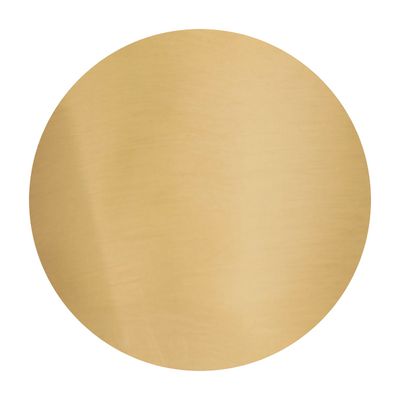 Brushed Gold
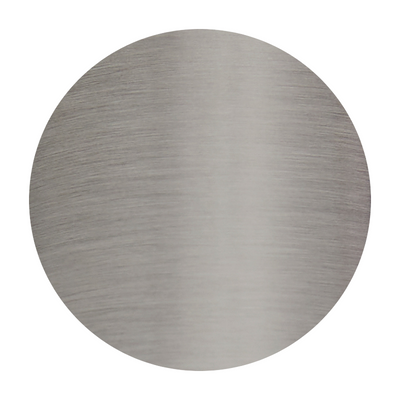 Brushed Nickel
 Champagne
 Chrome
 Copper
 Gun Metal Grey
 Stainless Steel

Bathroom Lighting Guide: LED Types, IP Safety Zones & Placement
You've just finished the reno. New vanity, new tiles, new tapware. You flick the light on and your face is in shadow, the shower's a cave, and the whole room feels like a change room at the pool. Sound familiar?
Here's the short version. A well-lit bathroom uses three layers: task lighting at the mirror, ambient lighting for overall fill, and accent lighting for depth. Every fixture needs the right IP (Ingress Protection) rating for where it sits, following the AS/NZS 3000 wet-area zones. Get those two things right and everything else is styling.
YourHome puts the average Australian home at 37 light bulbs, and LEDs use around 80% less electricity than halogen for the same output. So the fixtures you pick now matter for years.
In this article
- How to light a bathroom
- Types of bathroom lighting
- IP ratings and bathroom safety zones
- LED colour temperature, CRI and lumens
- Bathroom light placement by area
- How to plan your bathroom lighting in 6 steps
- Expert tip from a licensed electrician
- Common bathroom lighting mistakes
- Bathroom lighting quick reference
- Bathroom lighting FAQs
How to light a bathroom
Three layers do the heavy lifting.
Task lighting goes at the mirror. This is the light you shave, apply makeup and brush your teeth by. Sconces flanking the mirror at face height, or an LED mirror with even edge lighting, will beat a single downlight every time.
Ambient lighting is the general fill. Usually ceiling downlights or a flush-mount fitting, spaced evenly so there are no dark corners.
Accent lighting is the finish. A strip inside a shower niche, an LED under the vanity toe-kick, a small pendant over a freestanding bath. It adds depth and stops the room feeling flat.
Every fitting has to match the wet-area zone it sits in. That's where IP ratings and AS/NZS 3000 come in, which we'll cover below.

Types of bathroom lighting
The bathroom lighting category breaks into a handful of fixture types, each doing a specific job.
Vanity lighting. Wall sconces either side of the mirror, above-mirror LED bars, or an LED-integrated mirror. This is task lighting. Side-mounted is best for grooming because it lights both sides of the face evenly.
Ceiling lights and downlights. Your ambient layer. Recessed LED downlights are the standard in most Australian bathrooms. Flush-mount fittings work in lower ceilings or period homes.
Pendant lights. A pendant over a freestanding bath or at the end of a long vanity adds character. They have to sit outside the wet zones or carry the right IP rating.
Wall lights. Beyond the mirror, wall sconces can wash a feature tile wall or provide low-level night lighting near the toilet.
Mirror-integrated LED lighting. LED mirrors have become the default in new builds and renos. Even light around the face, no separate wiring for sconces, and most sit at IP44 which handles bathroom humidity.
Task, ambient and accent aren't fixture types, they're roles. One fixture can do more than one job. A good LED mirror does task and a bit of ambient at the same time.

IP ratings and bathroom safety zones
This is where competitors go quiet and where mistakes get expensive.
IP rating stands for Ingress Protection. It's a two-digit code. The first digit is protection from solids like dust (0 to 6), the second is protection from water (0 to 9). For bathrooms, the water digit is what matters. IPX4 means splash-proof from any direction. IP65 means dust-tight and protected against water jets.
AS/NZS 3000:2018 is the Australian and New Zealand wiring rules. It divides bathrooms into zones based on distance from water sources, and each zone has a minimum IP requirement. The NSW Government's electrical advisory sets these out clearly, referencing Table 6.1 of the standard.
| Zone | Location | Minimum IP | Notes |
|---|---|---|---|
| Zone 0 | Inside the bath or shower basin | Not permitted for switches/accessories | Only very low voltage fixtures rated for immersion |
| Zone 1 | Inside the shower stall up to 2.25 m high, or above the bath | IPX4 minimum | No switches or accessories permitted here |
| Zone 2 | 0.6 m band beside the shower/bath barrier | IPX4 at ≥0.3 m | Not permitted within 0.3 m |
| Zone 3 | A further 2.4 m across the floor beyond Zone 2 | No IP rating required at ≥0.3 m | Not permitted within 0.3 m |
IP44 is the common bathroom benchmark. It handles Zone 2 and most of Zone 3 without issue. For a recessed light directly above the shower, step up to IP65. Anything inside the shower cubicle needs to be sealed for direct water contact.
The zones are measured from the water outlet or the edge of the bath. A licensed electrician confirms them on site before install. Don't guess.
LED colour temperature, CRI and lumens
Three specs on the box, three things you actually feel in the room.
Colour temperature (Kelvin). The tone of the light. YourHome lists the scale as roughly 3000K warm white (cosy, yellowish), 4000K neutral white (clean, balanced), and 5500 to 6500K daylight (bright, bluish). For most bathrooms, 4000K sits in the sweet spot. Clean enough to see properly, not so cool it feels like a hospital. If the bathroom doubles as a makeup or grooming space, 5500 to 6500K daylight at the mirror gives the truest colour rendering.
CRI (Colour Rendering Index). A 0 to 100 score for how accurately a light shows colour compared to natural daylight. YourHome says CRI above 90 is advisable for applying makeup. Cheap LEDs often sit at CRI 80, which is fine for a hallway but makes skin tones look off at the vanity. Check the spec sheet.
Lumens. The actual amount of light, not the wattage. Energy Rating's replacement table is a handy shortcut. A 60W incandescent or 42W halogen should be replaced by an LED delivering at least 800 lumens. A 100W incandescent or 70W halogen needs at least 1,500 lumens. That's at CRI 80 for standard mains-voltage lamps.
A design ceiling worth knowing. NCC 2022 Housing Provisions Part 13.7.6 caps artificial lighting at 5 W/m² in a Class 1 building (most homes). That's a cap, not a target. With modern LEDs you'll usually sit well under it. The efficiency gain is real. LEDs use around 80% less electricity than halogen for the same light.
Bathroom light placement by area
Here's how the layers, zones and specs come together in each part of the room.
| Area | Recommended fixture | Min IP | Kelvin | Notes |
|---|---|---|---|---|
| Vanity / mirror | Wall sconces at ~1650 mm or LED mirrors | IP44 | 4000K or 5500–6500K for makeup | Side-mounted beats overhead. Avoid downlights directly behind the person. |
| Shower | Recessed LED downlight | IP65 (Zone 1) | 4000K | Sealed fitting, direct water contact rated. |
| Above bath | Downlight or pendant | IP44 minimum, IP65 if within Zone 1 | 3000–4000K | Pendant only outside Zone 1 or with correct rating. |
| Toilet area | Ambient downlight | IP44 | 3000–4000K | One downlight is usually enough. |
| Main ceiling | Evenly spaced downlights | IP44 | 4000K | Aim for even spread, avoid hot spots. |
| Ensuite | Combined ambient + vanity task | IP44 (IP65 in shower) | 4000K | Smaller room, fewer fixtures, same rules. |
The most common miss is downlights placed behind the person at the mirror. All you get is a shadow across the face. Move them forward, or ditch them for side sconces or an LED mirror.
How to plan your bathroom lighting in 6 steps
1. Map the wet zones. Mark Zones 0, 1, 2 and 3 on a floor plan using the AS/NZS 3000 distances. This decides the minimum IP for every fitting.
2. Decide the layers per zone. Task at the mirror, ambient across the ceiling, accent where it earns its place (niche, toe-kick, feature wall).
3. Pick colour temperature and CRI. 4000K for the main ceiling, 5500 to 6500K at the vanity if grooming matters, CRI 90+ for anything near the mirror.
4. Work out lumens per square metre. A rough starting point is 300 to 400 lumens per m² for ambient in a bathroom, more if it's a darker room. Stay under the NCC 2022 cap of 5 W/m² in Class 1 buildings, which modern LEDs make easy.
5. Confirm IP ratings for each fixture. Cross-check the fitting against the zone it'll sit in. Write it on the plan.
6. Get a licensed electrician for install. In Australia, bathroom lighting is licensed work. No exceptions.

Expert tip from a licensed electrician
"The trap I see most often is people picking fittings on looks alone, then finding out on install day the IP rating doesn't match the zone. A pretty pendant over the bath is fine if it's outside Zone 1 or properly rated, but if it's within reach of shower spray and only IP20, I can't install it. My advice is simple. Mark the zones before you shop. Take the plan to the retailer. Confirm the IP rating on every fitting before you pay. And if you're unsure whether a spot is Zone 1 or Zone 2, treat it as the higher one. Overspec on IP is never a problem. Underspec is a callback."
Licensed electrician
Common bathroom lighting mistakes (and the fix)
One ceiling light doing all the work. You get a shadowy mirror and dim corners. Fix: add task lighting at the vanity and space downlights evenly.
Wrong IP rating in the shower zone. IP20 fittings in Zone 1 fail electrical inspection and, worse, aren't safe. Fix: IP65 minimum for any light inside or directly above the shower.
Cool 6500K everywhere. Feels clinical, kills the mood. Fix: 4000K for ambient, save daylight tones for the vanity mirror if you need them.
Downlights behind you at the mirror. Casts your own shadow across your face. Fix: move fittings forward of the vanity, or add side sconces.
Ignoring CRI. Makeup looks fine at home, wrong outside. Fix: CRI 90+ at the vanity, always.

Bathroom lighting quick reference
| Area | Fixture type | Min IP | Kelvin | Lumens guide |
|---|---|---|---|---|
| Vanity mirror | Sconces or LED mirror | IP44 | 4000K–6500K | 400–800 lm per side |
| Shower | Recessed downlight | IP65 | 4000K | 500–800 lm |
| Above bath | Downlight or pendant | IP44 (IP65 in Zone 1) | 3000–4000K | 600–1,000 lm |
| Toilet | Downlight | IP44 | 3000–4000K | 400–600 lm |
| General ceiling | Downlights | IP44 | 4000K | 300–400 lm per m² |
Bathroom lighting FAQs
What IP rating do I need for a shower light?
IP65 minimum for anything inside Zone 1 (the shower stall up to 2.25 m). It has to handle direct water spray.
What's the best colour temperature for a bathroom?
4000K neutral white for the main lighting. Step up to 5500 to 6500K at the mirror if grooming or makeup matters.
How many downlights in a bathroom?
For ambient light, aim for 300 to 400 lumens per m². In a typical 6 m² bathroom that's usually three to four downlights, plus separate task lighting at the vanity.
Are LED mirrors worth it?
Yes, for most bathrooms. Even face lighting, no separate sconce wiring, and most sit at IP44 which handles humidity. You can compare options across bathroom mirrors to see the range.
Can I put a pendant over a bath?
Only if it's outside Zone 1, or if the pendant carries the right IP rating for the zone (IPX4 minimum in Zone 1). Confirm with your electrician.
What CRI is best for makeup?
CRI above 90. YourHome specifically calls this out for applying makeup. Below 90 and skin tones look off.
Is IP44 enough for a bathroom?
For most of the room, yes. Zone 2 requires IPX4 minimum at 0.3 m or more from the shower barrier, and IP44 meets that. In Zone 1 you need IP65.
How high should vanity sconces be?
Roughly 1650 mm from the floor, or at face height for the average adult. Mount them at the sides of the mirror, not above.
Do bathroom lights need to be on a separate circuit?
Not always, but many electricians run bathroom lighting on its own RCD-protected circuit for safety. Your electrician will advise based on the total load.
What's the difference between Zone 1 and Zone 2?
Zone 1 is inside the shower stall up to 2.25 m, or directly above the bath. Zone 2 is the 0.6 m band beside the Zone 1 barrier. Zone 1 needs IPX4 minimum with tighter fitting rules. Zone 2 allows more fixtures but still needs IPX4 at 0.3 m or more from the barrier.
References
- NSW Government: Switches and sockets in wet areas
- NCC 2022 Housing Provisions Part 13.7 Services
- Energy Rating: LED lamps 2025 determination
- Energy Rating: Comparing lumens and watts
- YourHome: Lighting